

DESCRIPTION
This project, developed in collaboration with Liberty Housing Organization for its Village Block and Boro Block affordable housing buildings, will provide culturally responsive housing support for newcomers and vulnerable individuals living in affordable housing. Through a culturally competent Housing Case Manager, clients will receive individualized support including tenancy education, housing navigation, landlord mediation, advocacy, crisis intervention and referrals to settlement and community services. The project will also provide flexible housing microgrants to address urgent needs impacting housing stability, health and safety, including mattresses, basic furniture, kitchen items, utility support, transportation, food support and moving costs. Using a trauma informed and client centred approach, the project will strengthen housing stability, improve safety and well being, support long term employment readiness, increase tenant inclusion and strengthen participants’ sense of belonging, community connection and contribution.
DETAILS
Affordability Framework
The project follows Calgary affordable housing standards, where eligibility generally requires households to earn less than 65% of the local median income, with a median income of $64,545. The project also recognizes culturally relevant barriers newcomers face, including limited Canadian credit history, nontraditional proof of income, language barriers, family composition, and challenges navigating housing systems.
Target Completion Date
Populations Served
Newcomers
Total Project Cost
$96,860.00
Total Units
253
Affordable Units
253
Populations Served - Notes
Newcomers
Project Funding
Funding Required
Case Manager: 30,560 (including EI, CPP, RRSP, Health benefits);Administration: $ 9,800; Microgrants: total of $55,000 , Other program costs: $ 1,500
Funds Raised
N/A
Use of funds
The requested funds will support a culturally responsive housing case management program for newcomers and vulnerable community members already living in affordable housing but continuing to face housing insecurity, isolation and barriers to stability. Funding will cover a part time Housing Case Manager position, administration and program coordination costs, microgrants and essential program expenses.
Human Impact Story
I arrived in Calgary, Alberta, in September 2024, welcomed not just by the promise of a fresh start but by a sharp, cheeky wind that seemed determined to introduce itself before autumn had even fully settled in. Getting my foreign credentials recognized felt like trying to convince a locked door that I was indeed holding the right key. My years of professional experience were suddenly under a microscope, and there were moments when I sensed that my accent and foreign work history were not being celebrated as much as they should be.
Housing was one of the hardest challenges my family faced. The Calgary rental market felt impossible to navigate. Affordable listings disappeared within hours, landlords asked for Canadian credit history and references I did not yet have, and every rejection increased my fear of how I would keep a safe and stable home for my three children. At the same time, I was adjusting to a completely different climate and way of life. One brisk October morning, I proudly stepped outside in what I thought was proper winter clothing, only to run back inside within seconds. My face said, “I’m ready for winter,” but my body whispered, “You’ve made a terrible mistake.”
Beyond the laughs, there were heavier challenges: language confidence in new situations, social isolation far from family, and financial strain while caring for my daughter, 7, and my boys, 1 and 3. It was during this overwhelming period that someone introduced me to the Centre for Newcomers.
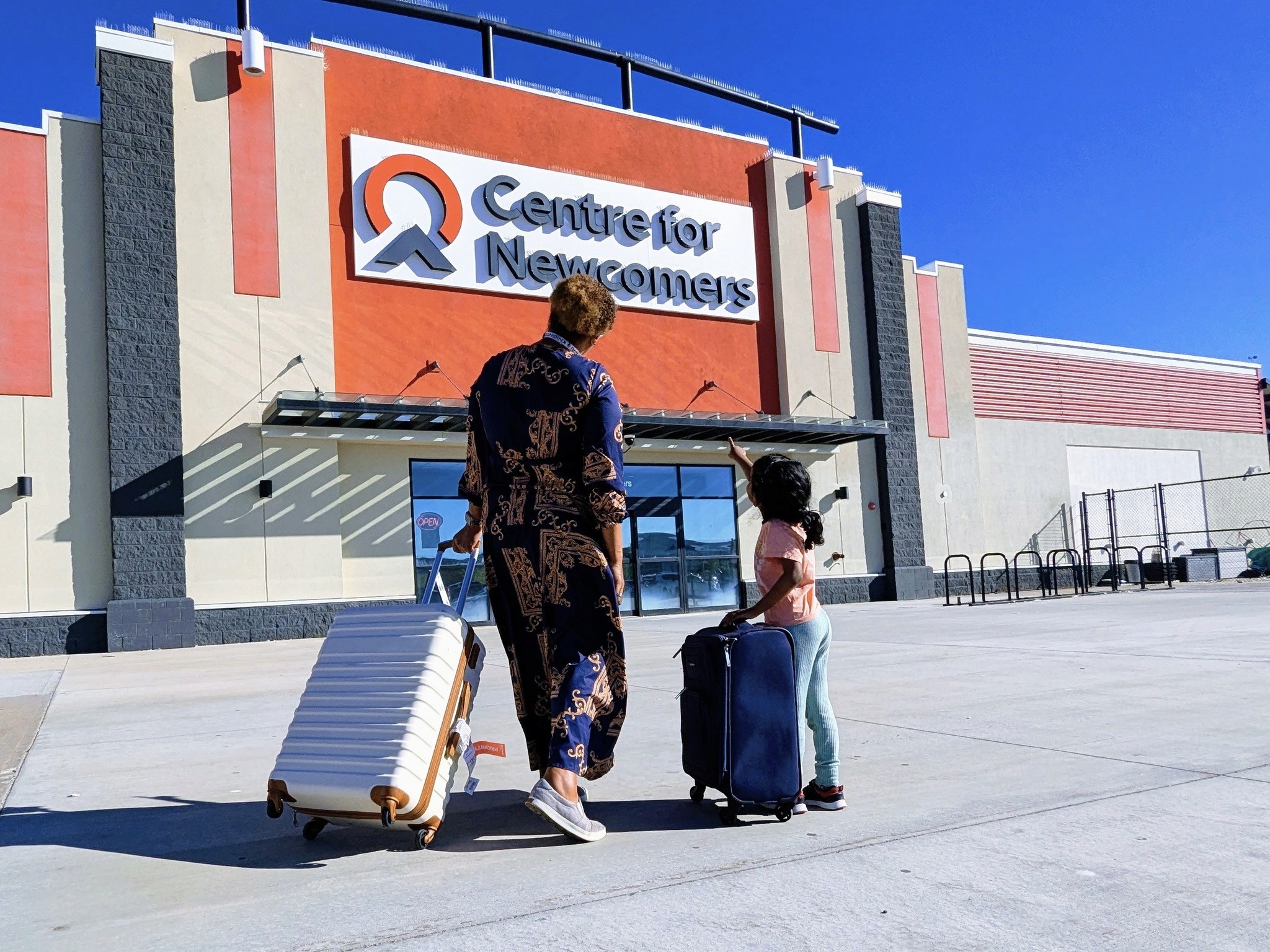
The Centre for Newcomers quickly became my anchor in Calgary. More than anything, they helped stabilize our housing situation during a time when I felt deeply uncertain and overwhelmed. They guided me through affordable housing systems, connected me to housing initiatives and supports, explained programs I did not know existed, and helped me navigate applications, benefits, and resources that reduced pressure on my family. They also connected us to the Free Goods Program, where we received gently used furniture, beds, kitchen items, and household essentials that transformed our apartment into a real home. What once felt temporary and unstable slowly became a place of comfort, dignity, and safety for my children.
CFN also supported us with food security resources, family benefits applications, financial literacy support, employability programs, Fair Entry passes, and mental health services during some of the most difficult moments of transition. Through their guidance, I enrolled my daughter in a Calgary Catholic School District program that reflected our values and helped access subsidized daycare for my toddlers, which brought enormous relief to our household budget.
What touched me most was that, despite our financial challenges, my children never felt excluded. Through the Fair Entry program and community supports, they were able to participate in swimming lessons, recreation, and activities that allowed them to make friends and feel included. It was not just about programs; it was about dignity, belonging, and hope.
One thing that struck me about Calgary is how much people give of themselves: time, skills, and kindness, regardless of what they are personally going through. Inspired by the support my family received, I began volunteering at the Calgary Food Bank, while my husband helped distribute relief items to people experiencing homelessness. Giving back helped us feel connected to the city and reminded us that community is built through care for one another.
Thanks to the Centre for Newcomers, Onward Homes, the Free Goods Program, the Calgary Food Bank, the City of Calgary’s Fair Entry program, and the kindness of strangers, my family and I are no longer just surviving. We are building a stable life, a safe home, and a future in Calgary. Even in the coldest winters, we found warmth in community. My daughter now says with confidence, “I can have big dreams too, and I will never give up on them.”
MAP